GenGuardX Blog
Responsible AI, in practice
Explore practical guidance on GenAI governance, AI risk evaluation, and regulatory evidence to help your team move AI systems safely into production.
AI Research
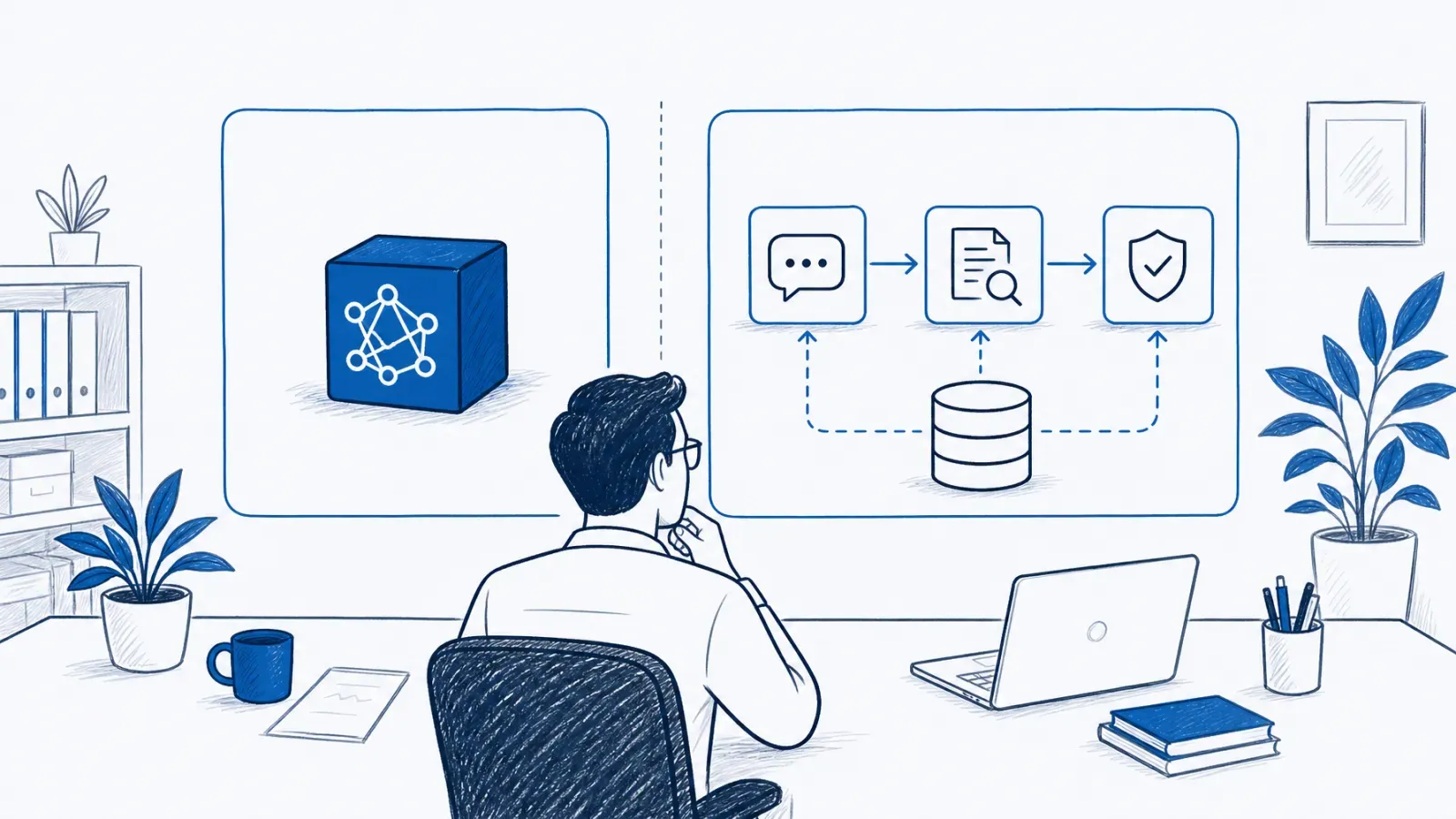
LLM Evaluation: A Practical Guide for Enterprise Teams
What to test, how to score it, and what evidence to keep: a practical path from test cases to release evidence, with rule-based checks, an LLM judge, and expert review.
Regulation
The EU AI Act and generative AI: what deployers and providers need on file
What the EU AI Act asks of teams that deploy or provide customer-facing generative AI in banking, insurance and healthcare, and the evidence to hold.
Regulation
The NIST AI RMF for generative AI: what each function asks a regulated team to show
The NIST AI RMF and its Generative AI Profile are voluntary, and regulated teams use them anyway. How Govern, Map, Measure and Manage apply to a customer-facing GenAI application.
Regulation
ISO/IEC 42001 and generative AI: what to document, test and keep as evidence
ISO/IEC 42001 is the certifiable AI management system standard. What it expects teams running customer-facing GenAI and agents to document, test and keep.
AI Model Evaluation
Jev vs. Gemini: Similar Accuracy at 88× Lower Evaluation Cost
In a banking customer-intent evaluation, Jev achieved 98.5% accuracy versus Gemini's 98.7%—while running approximately 6.9x faster at 88x lower reported cost.
Regulation
SR 26-2 left generative AI out. Here is how banks govern it now
SR 26-2 replaced SR 11-7 and put generative and agentic AI outside its scope. What bank model risk teams still owe their board and examiners, and a GenAI control set that mirrors the guidance's principles.
Regulation
The NAIC AI Model Bulletin: what insurers are expected to document and test
What the NAIC AI Model Bulletin expects of an insurer's AIS Program, what a regulator may request, and where generative AI in claims, prior authorization and policyholder service makes the evidence harder to produce.
GenAI Governance
What the Swiss Cheese Model teaches us about governing GenAI systems
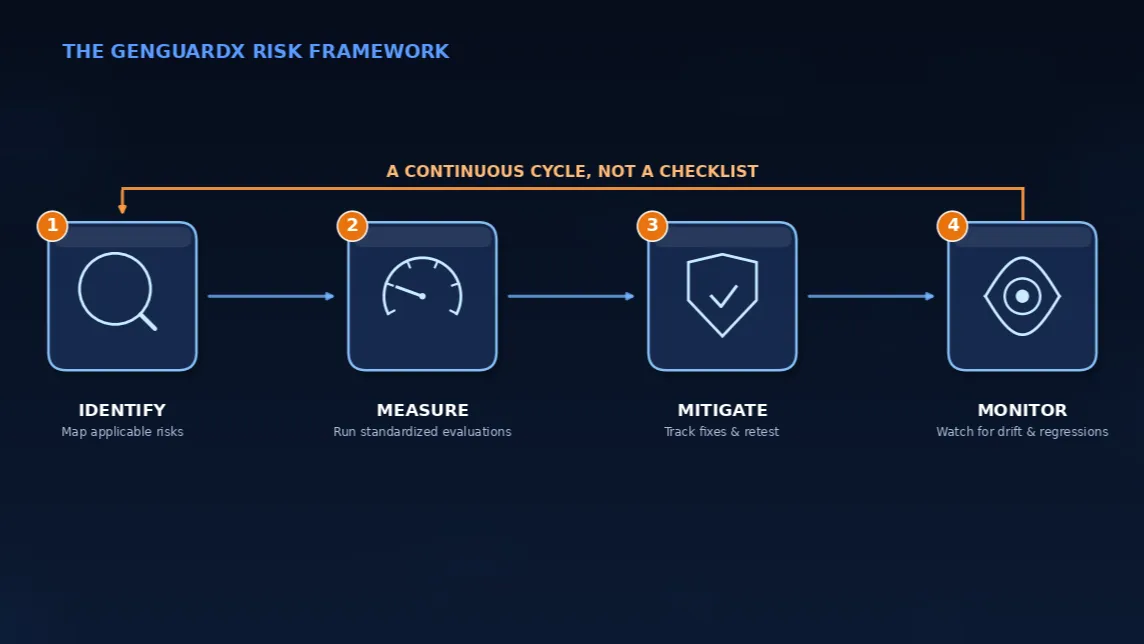
A production GenAI pipeline is a stack of layers, and every layer has holes. Using James Reason's Swiss Cheese Model, we map where risk enters a GenAI system, why business and risk teams see different gaps, and how to catch failures before the holes line up.
LLM as a Judge Research
LLM-as-a-Judge: A Practical Guide, with a Toxicity Detection Example
With the rise of large language models, there's a growing trend to use them as judges, not just generators. This piece explores LLM-as-a-Judge from first principles, examines its use across evaluation tasks, dives deep into toxicity detection, and applies best practices to create more reliable and robust evaluation systems.
AI Research
Beyond "Vibe Checks": A Practical Guide to Evaluating Agents
Everyone is building AI agents, but there's a big gap between a cool demo and a reliable, production-ready system. Fix one issue, and something else breaks - sometimes badly. We break down how agents work, why evaluating them is essential, and the key evaluation methods needed to move beyond simple "vibe checks."
AI Research
Hallucinations in AI: Understanding and Detecting Them
Large Language Models have demonstrated a remarkable ability to generate fluent, coherent, human-like text. Beneath this polished exterior lies a significant challenge - hallucination, where an LLM generates information that is nonsensical, factually incorrect, or unfaithful to a provided source.